
Israel: Between Conventional Iranian Missiles and the Saudi-Pakistani Nuclear Threat

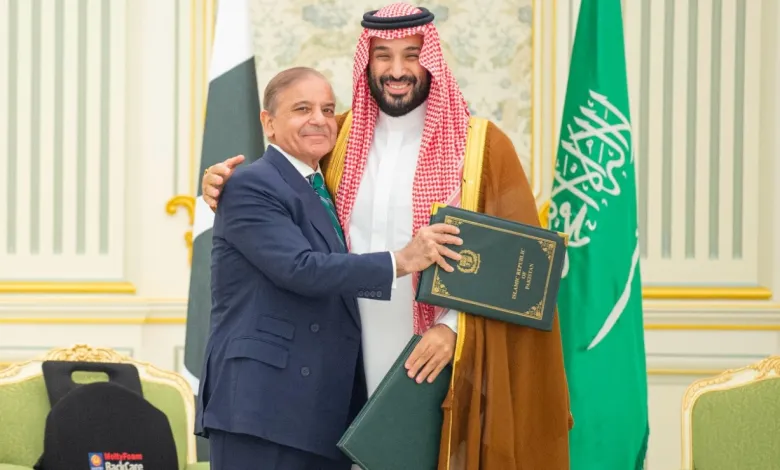
In 2015, Saudi Arabia was unsuccessful in persuading Pakistan to join the “Arab Coalition to Support Legitimacy in Yemen,” which was announced as Operation Decisive Storm by Saudi Arabia and the United Arab Emirates in March of that year. The Pakistani parliament voted unanimously to maintain neutrality in the conflict, while Islamabad reaffirmed its doctrine that it must defend the Two Holy Mosques (Mecca and Medina) specifically, and the Kingdom of Saudi Arabia more broadly, should the royal family face an existential threat.
This stance provoked displeasure in Riyadh and Abu Dhabi, which accused Pakistan of ingratitude and disloyalty. Consequently, both nations refrained from providing financial assistance for a period of two years and demanded the repayment of their deposits at Pakistan’s central bank, a measure that exacerbated Pakistan’s economic challenges. These issues persisted until the conclusion of Nawaz Sharif’s third administration. Upon the ascension of Imran Khan to power, Saudi Arabia and the United Arab Emirates resumed their investments in Pakistan, depositing a combined sum of 5 billion USD at the State Bank of Pakistan. During his visit to Islamabad in February 2019, Saudi Crown Prince Mohammed bin Salman formalized investment agreements with the Khan administration valued at 20 billion USD, marking the most substantial Saudi investments in Pakistan to date. This development signified a reinvigorated effort by Riyadh and Abu Dhabi to integrate Islamabad into a strategic initiative that then-U.S. Secretary of State Mike Pompeo sought to advance: a “Sunni NATO” aligned with Israel to contain Iran and its regional allies.
Despite several incidents that year, from attacks on ships and oil tankers in Gulf waters to the September 2019 strikes on Saudi Aramco’s facilities at Abqaiq and Khurais, Pakistan chose not to join the alliance. This decision was to prevent importing the Sunni–Shia divide from the Middle East into Pakistan’s internal conflicts, which are already strained by ethnic, sectarian, and tribal issues.
Inspired by recent events, Saudi leaders realized that relying on the United States for protection was an illusion, as the American security guarantee proved unreliable. They swiftly sought a new global security partner. Due to significant challenges—financial, logistical, military, technological, and strategic—in replacing the U.S. with China, Riyadh decided to form a “Joint Strategic Defense Agreement” with Pakistan. A key clause states, “any attack on one state is an attack on both.” While Saudi Arabia cannot militarily support Pakistan, this clause aims to obligate Pakistan to defend Saudi Arabia’s security and stability, effectively extending Pakistan’s nuclear shield over the Kingdom as a replacement for the security treaty they had hoped to negotiate with the Biden administration in its final months.
Facts and analysis:
The Israeli air strike on Qatar with “Silver Sparrow” missiles (range: 2,000 km) likely influenced Riyadh’s decision to proceed with this agreement. Whether the missiles were launched over the Red Sea or from Syrian airspace, they passed through Saudi airspace on their way to Doha targets. Saudi leaders also realized that negotiating a deal with China was practically impossible, and that a security pact with Washington had technological limitations. In the Qatar strike, Israel disabled U.S. air-defense systems in the Gulf, including THAAD and Patriot. Riyadh learned that such a treaty would not prevent or overcome Israeli threats, leaving Saudi Arabia and Gulf states vulnerable to Israel’s advanced military resources.
Consider, then, the counterfactual: if Yemen’s Ansar Allah (the Houthis) or Iran had launched strikes at that precise moment—when Gulf air-defense systems were compromised—targeting sovereign, political, military, or economic sites, the damage would likely have been significant and difficult to repair, due to the region’s technological and military weaknesses. This explains why Crown Prince Mohammed bin Salman carefully pushed for the agreement with Pakistan: both countries need each other, and this partnership advances their shared interests.
This Saudi–Pakistani alignment will serve as the core of a “Sunni NATO,” likely to attract numerous Muslim-majority states—Egypt, Turkey, Bahrain, Qatar, among others. Its strategic goals, however, will not reflect those envisioned by former U.S. Secretary of State Mike Pompeo. Instead, it has formed to contain the Israeli threat as perceived by these capitals after Israel’s air campaign against Iran in June 2025 and its strike on Doha in September 2025. Turkey, Qatar, Saudi Arabia, and Egypt now fear that Israel could target them if its strategic calculations demand it.
Although the alliance may seem like a protection against Israel’s actions, its true goal is to counter Iran and its allies—such as the Houthis in Yemen, the Popular Mobilization Forces in Iraq, and Hizbullah in Lebanon. Tehran and its partners see the emerging bloc with suspicion, having recognized its real purpose since the emergence of discussions about a “Sunni NATO” in 2017, which was initially aimed at containing Iran and its network.
One goal of the Saudi–Pakistani agreement is to domestically develop military industries within Saudi Arabia, including nuclear-related technologies such as uranium enrichment, by transferring essential equipment and establishing the necessary facilities within the Kingdom. In return, Saudi Arabia will invest billions of dollars in the Pakistani economy and Pakistani military industries.
The agreement additionally anticipates the deployment of Pakistani military units with diverse specializations to Saudi territory. With Egypt’s restitution of the islands of Tiran and Sanafir to Saudi sovereignty, the Kingdom now confronts Israeli territorial waters via maritime access; consequently, Pakistan would, for the first time, be positioned on Israel’s maritime frontier.
This would place Pakistan, a Sunni nuclear power, on the border of Israel, a Jewish nuclear state.
If Turkey and Syria join the bloc, the usual logic of military alliances would require rotating Pakistani units into Turkey and Syria; the result would be a Pakistani army presence along Israel’s land border.
If Iran believed the coalition’s only aim was to contain the Israeli threat, it might agree to join in principle. In such a case, Israel would confront both Iran’s conventional missile arsenal and a nuclear deterrent from Saudi Arabia and Pakistan, especially relevant following Israel’s recent experience testing Iran’s missile systems during the June 2025 war.
A probable outcome of the Saudi–Pakistani alignment is the public crystallization of the pre-existing Israeli–Indian strategic partnership established since 2015, when the Hindu nationalist Bharatiya Janata Party assumed power, and further strengthened over the past decade across the spheres of technology, security, and economics. India’s adversarial stance towards Islamist movements aligns with Israel’s own, as Israel has been burdened by conflicts with Hizbullah, Hamas, Palestinian Islamic Jihad, Yemen’s Ansar Allah (the Houthis), and other Islamist entities in the region.
Just as Jerusalem and the Palestinian issue are central to Arabs and Muslims in the Middle East, Kashmir holds similar significance for Pakistan, often called ‘Pakistan’s Jerusalem.” This highlights the development of two opposing, often hostile alliances: one composed of Muslim-majority countries, and the other centered around Israel and India. This alliance could also include any nation involved in conflicts with militant Islamist groups, such as Myanmar, the Philippines, and others.
If the emerging Pakistani–Turkish–Azeri alliance connected through Syria and Jordan to Saudi Arabia, it would create a close-knit geopolitical circle surrounding Iran, reaching all the way to Israel’s border.
If a Turkish–Russian–Chinese alliance emerges, as suggested by Devlet Bahçeli, leader of Turkey’s Nationalist Movement Party (MHP), it would likely align with the Pakistani–Saudi alliance due to China’s partnership with Pakistan and the ongoing rivalry between China and India. This is true despite the displays of friendliness between India and China at the Shanghai Cooperation Organization summit in Tianjin in September 2025, partly motivated by their shared opposition to tariffs imposed by the Trump administration.
It is also possible that a future U.S. administration might adopt a different approach to handle crises stemming from the rise of a “Sunni NATO” outside Washington’s influence.
One Comment