
Series – Wealth and Finance in Islam (Section 1)

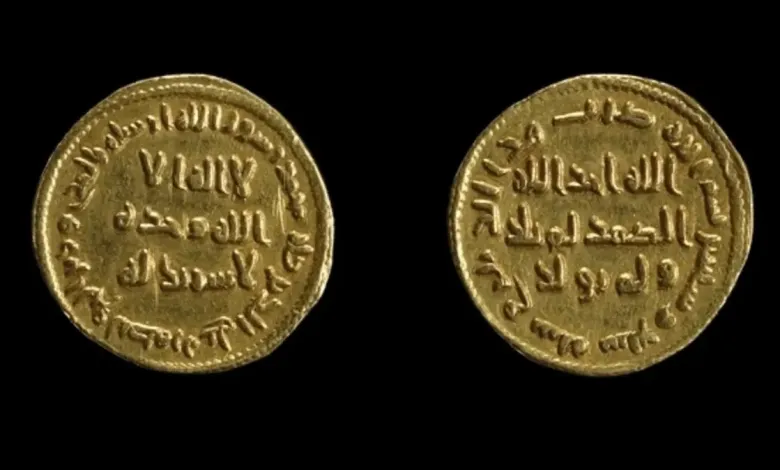
Since the rise of Islam, neither its scholars nor its thinkers ever characterized commerce, agriculture, or productive enterprise in ideological terms. For centuries, economic activity was understood as a human pursuit – practical, ethical, and open – rather than a matter of doctrine or sect. Only in the modern era did certain Islamic movements, motivated by a profound sense of inadequacy and a desire for distinction, begin to ideologicalize the very core of economic life. In doing so, they distorted both history and reason, introducing contrived terms such as “Islamic economy,” “Islamic banking,” “Islamic stock exchange,” “Islamic shares,” and “Islamic financial derivatives”—phrases entirely disconnected from Islam’s intellectual and historical legacy.
In reality, the economic sphere in Muslim lands was never exclusive to Muslims. From the earliest days of Islam, Muslims, dhimmīs, and even merchants from non-Muslim regions worked together in trade, agriculture, and industry. The success of early Islamic societies depended on inclusion and exchange, not segregation or dogma. The historical record is clear: public wealth in Islam—what we might call the economy today—was largely built through the contributions, labor, and resources of non-Muslims.
It is precisely this confusing ideological reinterpretation of what was once a realm of cooperation and pragmatism that has motivated us to conduct a thorough study of the history of money in Islam. Our aim is to expose the falsehoods spread by certain modern theorists who, under the banner of “Islamic economics,” have replaced historical facts with slogans and guesses. Through this work, we seek to restore intellectual clarity and historical truth to a field long obscured by controversy.
We will revisit the origins, emphasizing the genuine principles of wealth and economic activity as they emerged in early Islam, free from misleading narratives promoted by self-serving ideologues. Drawing on historical, legal, and practical evidence, we will demonstrate that Islam’s true economic foundations rest on knowledge, justice, and active participation, rather than ideology.
Section I – The Fundamental Sources of Wealth in Islam
Part 1: Economy of the Arabian Peninsula before Islam
04/11/2025
Part 2: The Emergence of a System of Public Wealth and Finance in Medina and Its Structural Link with the Military
11/11/2025
Part 3: Fayʾ: The Second Source of State Revenue in Islam
21-11-2025
Part 4: The Emergence of Zakāt as an Act of Worship, and Kharāj as the Third Source of Public Revenue
27-11-2025
Part 5: Modern Financial Speculation and Islamic Muḍāraba: A Conceptual and Structural Divergence
24-02-2026