
Series - Federalism: Islam’s Interregional Governance System

Part I
6-1-2024
Quranic verses provide the general foundational principles for the nature of governance in Islam without delving into minutiae and laws, delegating the interpretation of these principles to people depending on their needs and on the rules of politics in each era, per these Quranic principles. Thus, the Quran established the general foundation of federalism as one of the principles of the Islamic governance system.
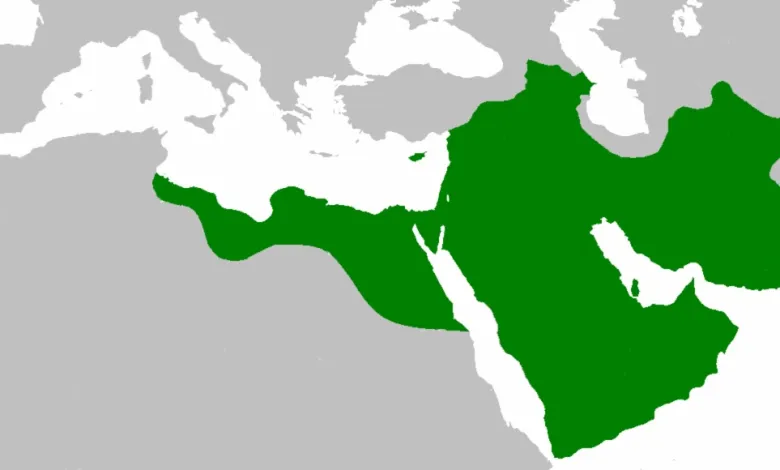
Given that Islam was initially a Middle Eastern and later a global religion, it was embraced by various peoples and ethnicities. Several regions and countries with their own administrative, political, and economic systems organized themselves under the first Muslim Caliphate.
Part II
16-1-2024
Historical facts dating back to the era of the Islamic founding fathers reveal that the interregional governance system granted some sovereign powers to the central authority, which were delegated to the governors of the regions[i] and incorporated into their general jurisdiction.
Each governor or prince of a region had the authority to deploy armies for invasion, call upon the people for jihad in the lands within his jurisdiction, reinforce the frontiers with fighters, organize military brigades under commanders, and order them to march for jihad, providing them with men, provisions, and resources.
Negotiating peace treaties with neighboring kingdoms was also under the governor’s purview. Kings paid tribute willingly, embracing Islam if they so desired. All these matters fell within the general jurisdiction granted to the governor, enabling him to manage the affairs of his jurisdiction alongside internal and local affairs where the interregional system in Islam parallels the federal system in modern federal states.
[i] In this text, when speaking generally, the terms “region,” “state,” and “province” are used interchangeably. When specified, it is important to note that iqlim (region) might include several states/provinces (wilaya). For example, the region of Iraq included the wilaya or state/provinces of Basra and Mosul
Part III
30-1-2024
Contemporary Muslim nations stand incapable of resolving their fundamental internal structural crises. They lack the means to extricate themselves from the existential threats many face today unless they seek solutions to avert their imminent decline.
These countries have two potential avenues for resolution. The first is to transform their centralized political systems into a modern civil federal system, which is prevalent in many countries today.
Contemporary Muslim nations stand incapable of resolving their fundamental internal structural crises. They lack the means to extricate themselves from the existential threats many face today unless they seek solutions to avert their imminent decline.
These countries have two potential avenues for resolution. The first is to transform their centralized political systems into a modern civil federal system, which is prevalent in many countries today.