
Republicans Demonstrate Absolute Loyalty to Trump

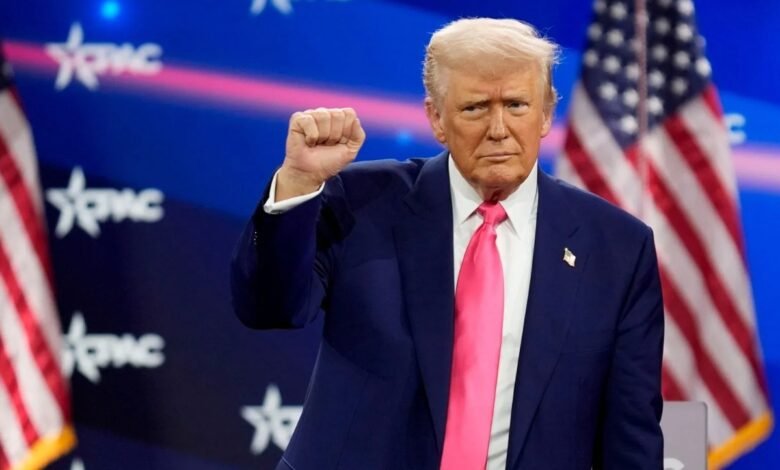
U.S. President Donald Trump stated that the Republican Party has become bigger and stronger than ever before, reaffirming one of the paradoxes identified by Dr. Youssef, President of ICGER, in the center’s annual geopolitical report published on Friday, February 21, 2025. The report noted that, unlike his first presidential run in 2016, Trump received a popular mandate in the 2024 election, and the Republicans have now become obedient to him, following him with complete loyalty.
In a speech on Saturday, February 22, 2025, at the Conservative Political Action Conference (CPAC), Trump stated that the Republican Party will achieve “a fantastic performance” in the 2026 midterm elections.[i]
He added, “We are at a level… I don’t think we have ever reached this level before, perhaps ever, as a Republican Party,” affirming that “we (the Republican Party) are bigger, better, and stronger than ever before. There are more people in our party than at any time in history.”
Dr. Youssef had mentioned in his analysis of the events of 2024 in the annual geopolitical report that one of the paradoxes of the 2024 U.S. presidential election was “Trump’s attainment of a popular mandate and clear legitimacy, to the point where no one in the Republican Party disputes his authority. In fact, Republicans now follow him with obedience and loyalty, unlike in 2016, when the late Senator John McCain opposed him on many policies.”
He pointed out that “in 2024, Trump moves and acts without any challenger, exercising clear and evident control over the Republican Party and its members in Congress.”
[i] http://www.newsweek.com/donald-trump-predicts-republicans-defy-history-cpac-speech-2034907