
Why Trump Wants Greenland: The Mathematics of American Geopolitical Power

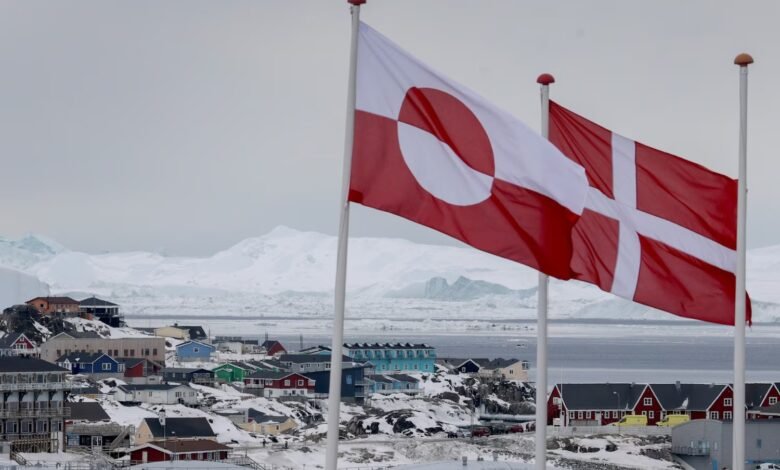
It is widely circulated and heavily debated that U.S. President Donald Trump and his administration aim to annex Greenland into the United States. One might ask: what would motivate the American president to pursue such a move, given the global condemnation, strong European opposition, accusations of violating international law, and the revival of imperial and colonial practices from the 18th and 19th centuries? Moreover, what precedent would this set for other states seeking territorial expansion or asserting claims by force, such as China with Taiwan or Russia with Ukraine?
Our approach to this issue relies on a scientific method grounded in classical Newtonian principles. We use political–mathematical equations that remove guesswork, demonstrating that the political realm is governed by material laws that influence and shape political events. These laws directly affect political powers and organizations, which operate within their constraints and are driven by their outcomes. Neither political leaders nor administrative bodies can circumvent this control.
Since Trump is dedicated to the goal of “making America great again,” he is motivated to incorporate Greenland and Canada into the United States. This provides strong empirical support for our scientific method of political analysis, a point that will be confirmed by the political-mathematical equation introduced later.
Trump, perhaps unknowingly, is influenced by a fundamental political principle that shapes his understanding of political dynamics. His intuition suggests that America’s greatness increases as it integrates more states and territories. This same intuition also leads him, often unconsciously, to favor territories with extensive coastlines and direct access to open seas and oceans. Essentially, he is following the basic material law and political-mathematical principle that connects a nation’s greatness to its geopolitical strength, particularly through maritime and oceanic access.
This is precisely why former President Trump is not pursuing the annexation of landlocked states or territories: such regions do not enhance the geopolitical strength of the United States.
We can articulate the formal rule for measuring the core (abstract) intensity of states’ geopolitical influence in the following equation:

This equation relates a territory’s area to its coastline. When we refer to the Intensity of Geopolitical Power Index created by ICGER based on this equation, the intensity of the geopolitical power of the United States is:

Where MY (Mega-Youssef) is the unit used to measure the intensity of geopolitical power.
The fundamental intensity of Canada’s geopolitical power is measured at G = 304.7 MY.
When the fundamental intensity of Greenland’s geopolitical power is calculated, it is found to be G = 63.6 MY.
The measurement further shows that Greenland’s fundamental geopolitical power exceeds that of the United States.
If Greenland is incorporated into the United States, the resulting geopolitical power intensity becomes G = 98 MY.
At that level, the United States surpasses Russia in fundamental geopolitical power and likewise overtakes China.
If Canada is then incorporated into the combined entity (United States + Greenland), the resulting geopolitical power becomes G = 402.7 MY.
When comparing these values to the ICGER Intensity of Geopolitical Power Index state rankings, it becomes evident that the U.S. geopolitical power nearly matches the combined power of most countries, making it an effectively undefeatable geopolitical force.
This framework offers a theoretical rationale for President Trump’s and his administration’s push to include Canada and Greenland in the United States, extending beyond their material resources.
Strategically, adding Canada and Greenland would allow the U.S. to establish missile-defense systems on nearby Arctic land, enabling the interception of ICBMs from Russia, China, and North Korea. It would also allow the U.S. to deploy forward-based platforms for strategic missile systems like Trident II, supporting Trump’s claim that “we need Greenland, it is extremely important strategically right now… we need it from a national security standpoint.” These actions would give the U.S. new geographic threat vectors against rivals, transforming the global strategic balance.
The strategic importance of Greenland and Canada grows even more when their energy and mineral resources are included in the analysis. These resources are vital for sustaining U.S. economic and technological leadership, especially in relation to China. Greenland alone is estimated to have around 17.5 billion barrels of oil and 148 trillion cubic feet of natural gas (approximately 41 trillion cubic meters). Canada possesses roughly 171 billion barrels of oil and 38.7 trillion cubic meters of natural gas, along with Greenland’s significant reserves of strategic minerals like lithium, cobalt, graphite, and uranium.
Therefore, including Greenland and Canada is a matter of U.S. national security, dictated by the fundamental laws shaping the political sphere. American leaders follow these laws, even if they remain unaware of their existence or how they operate.
[1] Youssef, Mohammad Walid. Politics: Newtonian Laws and Quantum Principles. Beirut: International Center for Geopolitical and Economic Research (ICGER), 2025, p. 114.