ICGER Launches its Annual Geopolitical Report with a Panel Discussion
Dr. Youssef: The World Is Heading Toward a Nuclear Arms Race in 2026

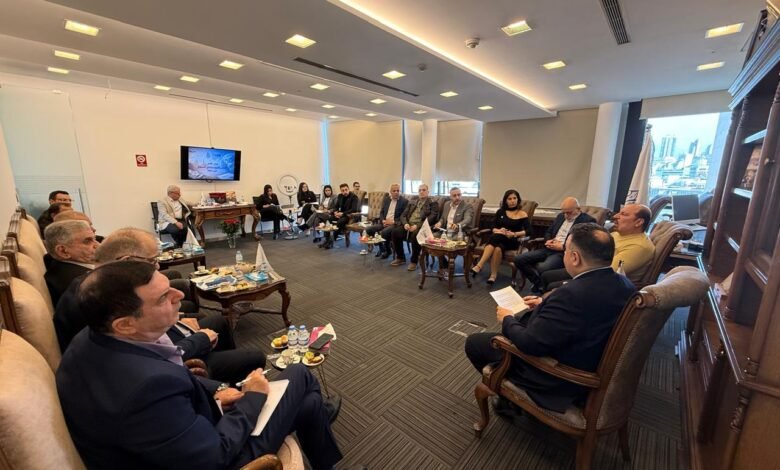
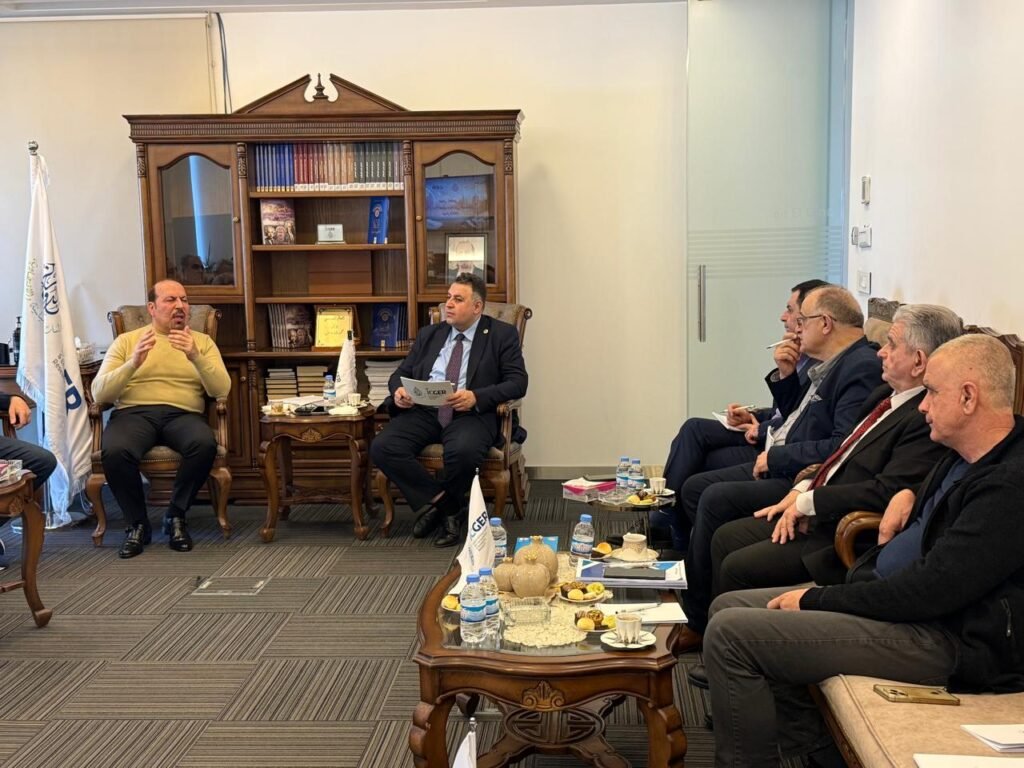
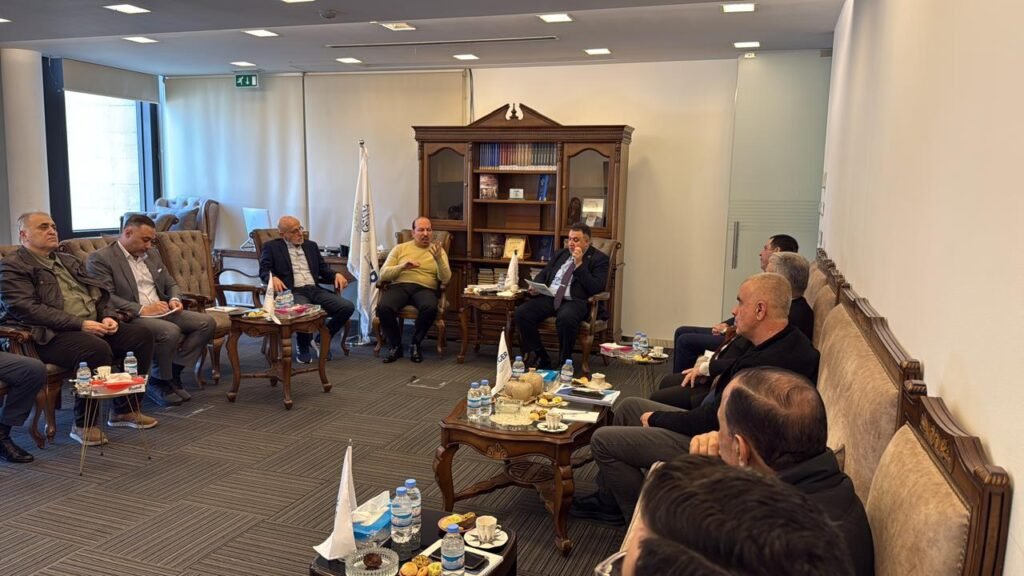
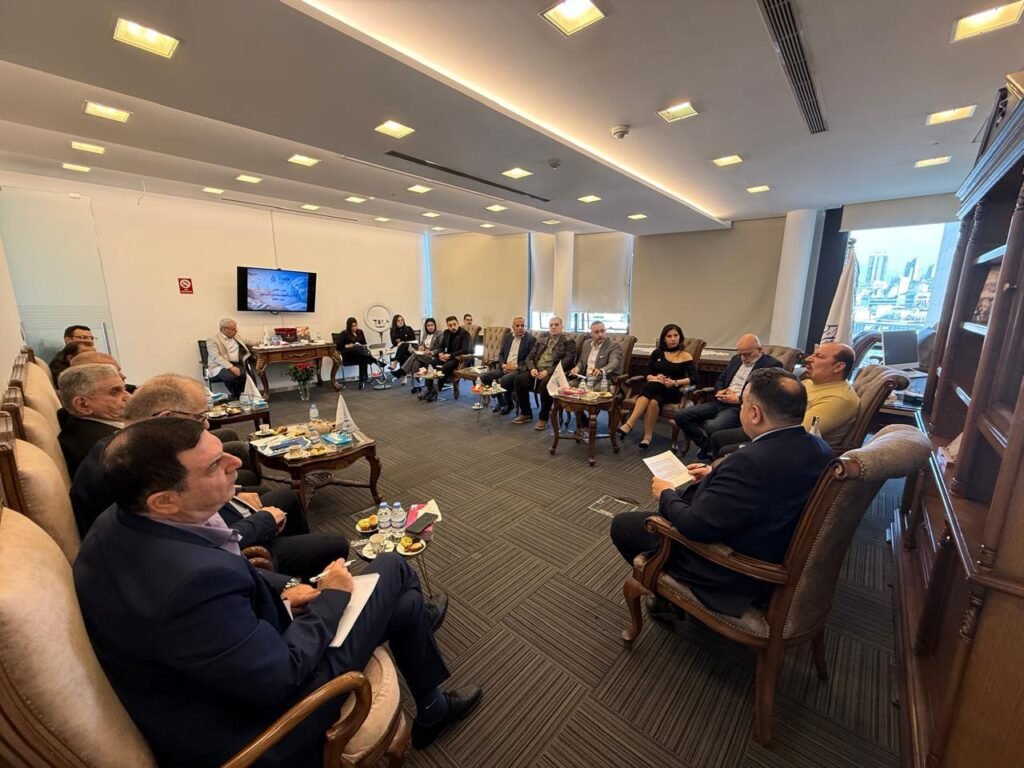
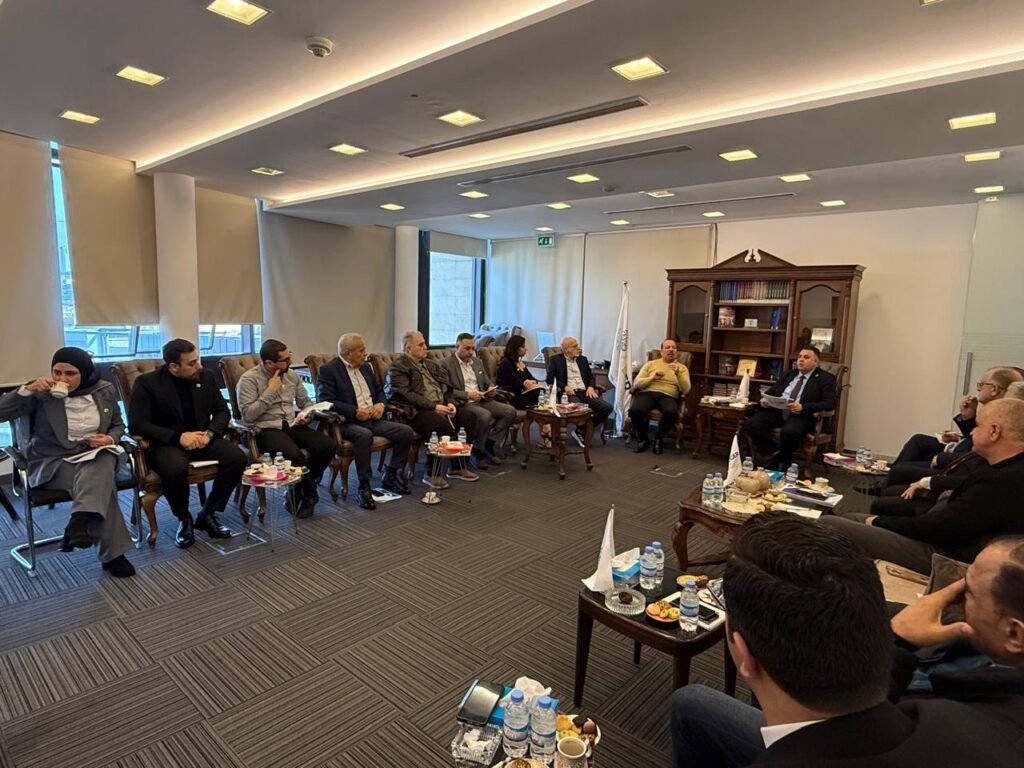
On Tuesday, 17 February 2026, ICGER hosted a panel discussion at its headquarters in downtown Beirut to celebrate the launch of the 2025 Annual Geopolitical Report. The event featured the Center’s president, Dr. Mohammad Walid Youssef, and was attended by a select group of experts and observers specializing in geopolitical and strategic issues, along with ICGER’s research team.
Dr. Imad Ghanoum, who moderated the session, highlighted the high intellectual significance of the Annual Geopolitical Report 2025, noting that few other centers monitor political developments with such methodological rigor.
He mentioned that “what we present today is the result of pioneering work based on an integrated scientific and practical methodology created by political scientist Dr. Mohammad Walid Youssef. This methodology aims to identify the laws that govern the political landscape, understand how it operates, and predict the outcomes of its developments.” He added: “It is an approach that views politics as a realm ruled by strict, impartial, objective material laws that influence events, direct their paths, and set the boundaries of what can happen.”
Dr. Ghanoum emphasized that “experience has demonstrated, through compelling evidence and clear examples, the robustness and value of this method,” noting that it has attracted the interest of politicians and decision-makers globally.
Dr. Mohammad Walid Youssef began by outlining his scientific approach to political analysis, focusing on its principles and core rules. He emphasized the key differences between classical (Newtonian) political analysis and quantum political analysis, which relies on probabilities. He pointed out that quantum politics has become an essential tool for understanding and interpreting international political developments that classical analysis cannot sufficiently explain, particularly when interests across geopolitical, strategic, national, sectarian, economic, and commercial domains converge or diverge.
Dr. Youssef characterized 2025 as a year marked by turbulence and a resurgence of military strategies, noting that “the militarization of the world is now clearly visible in geopolitical circles, whether in Europe, the Gulf, or East Asia, especially China, and that the world is moving toward an escalating nuclear arms race starting in 2026 and continuing in the future.”
He noted that these developments indicate “the nearing end of the current phase of the international order, as the era of coexistence concludes,” and signal preparations for “a new phase in the international system, marked by conflict among states and major powers.”
Dr. Youssef provided a detailed overview of China’s recent weapons development, highlighting its technical and military progress. He discussed escalation scenarios in East Asia, particularly concerning Taiwan and the potential annexation between 2027 and 2030, asserting that China will have finished its preparations by then. He warned that these developments could lead to a geopolitical confrontation, which might escalate into a large regional war or even a world war, signaling the beginning of a new phase in the international order’s historical cycle.
He also emphasized that the region will be divided into two main axes: one led by Saudi Arabia and Pakistan, with Turkey, Egypt, and the Damascus government in Syria joining; the other includes the United Arab Emirates, Israel, Cyprus, Greece, Ethiopia, and the “Somaliland” region. He stated that these axes will redefine relationships across the Middle East, leading to a geopolitical restructuring where some states fade away and new ones arise from their remnants.
Dr. Youssef also cautioned that a “major epic confrontation” between Sunnis and Shiites is likely to occur in a new historical cycle of conflict. He warned that Lebanon and Iraq could become key battlegrounds for Sunni–Shia tensions in the region.
Dr. Youssef highlighted Europe’s shift towards militarization, defensive strategies, and localized defense industries. However, he noted that the continent faces significant challenges in armament and military support because economic strain and fiscal constraints hinder its capacity to fund rearmament initiatives and sustain long-term conflicts.
He argued that the European political landscape will lead voters to support right-wing parties that call for dismantling the European Union, bringing back national currencies, and deporting migrants—mainly due to declining healthcare and social services, the erosion of the welfare state, and various political, military, and strategic failures. He also forecasted that these far-right parties will secure victories in elections across most European nations.
The session ended with an open Q&A period.