
Iran Controls Two Strategic Straits as Saudi Arabia Risks Becoming Landlocked

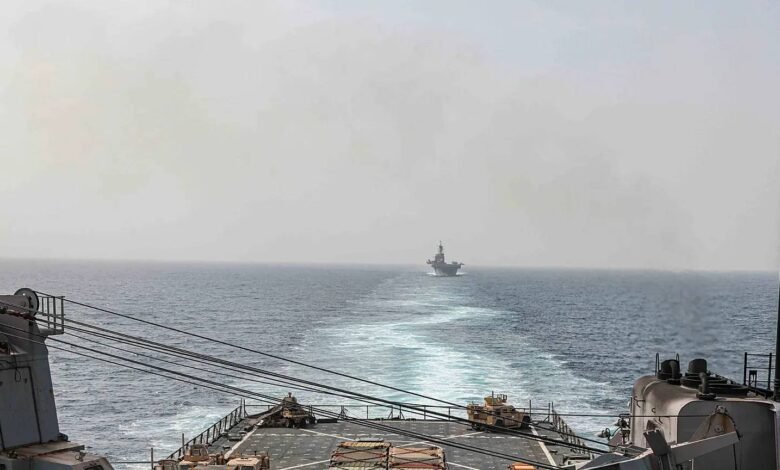
The Iran-backed Ansar Allah movement, or Houthis, has strengthened its hold on the strategic Bab al-Mandab Strait after deploying fighters to Mayyun Island, also called Perim, located at the strait’s center. The group has also extended its control along Yemen’s western coast up to the town of Dhubab, just hours after capturing Mokha and its historic port.
ICGER president Dr. M.W. Youssef previously discussed this situation in a study published by the Center on April 14, 2026. In a series titled “The Fourth Gulf War – Part Three: The Newly Established Strategic Equations,” the study argued that if the U.S. continued its blockade of Iranian ports, it could set a precedent that might allow Iran to expand its influence over the Red Sea and Bab al-Mandab Strait.
Dr. Youssef wrote:
If Iran’s allies, like the Ansar Allah Houthi movement in Yemen, saw Iran succeed in changing the rules and charging fees on maritime traffic via the Strait of Hormuz, earning billions annually, what would stop them from declaring the closure of the Bab al-Mandab Strait? They could also impose transit fees on ships passing through the strait and the Red Sea.
This could be approached similarly to the Suez Canal and the revenues it brings to the Egyptian state treasury, especially considering Ansar Allah’s urgent need for funds to cover its expenses.
It is important to note that Saudi Aramco’s East-West Pipeline can transport about seven million barrels of oil daily to Yanbu port on the Red Sea. If Ansar Allah gains control of access through the Bab al-Mandab Strait, these oil volumes could be blocked from reaching Asian markets. Consequently, Saudi Arabia would effectively become landlocked in strategic terms.
Dr. Youssef made a similar argument in his book, Politics: Newtonian Rules and Quantum Principles, where he outlined the Center’s scientific methodology and wrote:
“Saudi Arabia is considered to have limited geopolitical importance because it does not oversee semi-enclosed seas like the Persian Gulf, which are controlled by other powers through key straits such as Bab al-Mandab.”
Dr. Youssef further stated:
“Saudi Arabia’s overall power is largely concentrated in its considerable Islamic ideological influence, together with the economic power derived from the presence of oil and gas within its territory, as well as its demographic power. […]
Once the oil and gas reserves across its territory are eventually exhausted, Saudi Arabia’s influence will mainly rely on its Islamic ideological strength and demographic factors. Consequently, its overall influence will decline, leading to a diminished role in both regional and global systems.”