
A Genealogy of Takfīr in Islamic History Second Edition

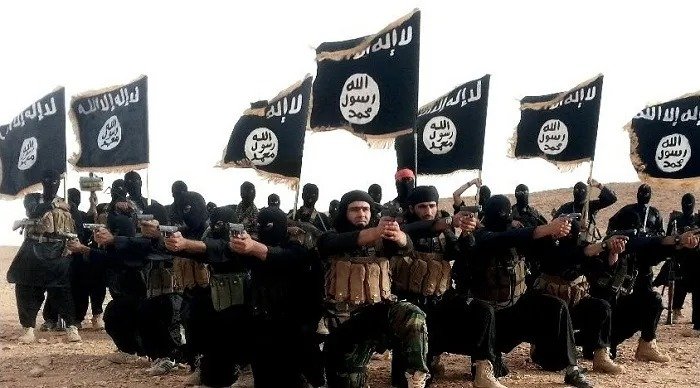
Acts of violence among Muslims, including acts of killing and bombing, have increased with minimal objection. Reports of suicide bombings and other types of assault targeting congregational mosques, markets, schools, universities, hospitals, and other public spaces have become so routine that they garner little attention or concern, even when dozens or hundreds of Muslim civilians are slain in the course of their daily lives.
In 2017, hundreds of worshippers lost their lives at al-Rawda Mosque in Sina’, Egypt. Similar massacres have taken place in educational and religious institutions across Balochistan, Waziristan, and Peshawar in Pakistan; in Kabul, Jalalabad, and Kandahar in Afghanistan; in al-A’zamiyya and al-Karkh districts in Baghdäd, ‘Irãq; and similarly in Nigeria, Syria, and other regions within the Islamic world.
It is as though Muslims have become accustomed to al-Qā ida, al-Nuşra, the Islamic State, Boko Haram, the Tälibän, and other such organizations declaring the overwhelming majority of Muslims to be unbelievers and issuing rulings sanctioning their killing.
Indeed, the silence surrounding the spread of takfir against Muslims by Islamic groups will have grave consequences in the coming years. This is especially so after the al-Nuşra Front, together with other factions and armed groups, attained power in Syria and removed the regime of Bashshar al-Asad in December 2024; after Islamic groups regained their strength and consolidated their authority across the Sahara in Africa; and amid the prospect of their gaining control over states of the Sahel and Sahara, including Mali, Niger, Burkina Faso, Sudan, Chad, and Libya. This danger is compounded by the renewed dispersal of Islamic State cells in Iraq and Syria following the completion of the withdrawal of international coalition forces from Iraq at the end of September 2026, as well as by the renewed activity of Islamic groups in Pakistan, Afghanistan, and Central Asia, extending as far as Indonesia
If the initial wave of global Islamic terrorism commenced with the attacks on September 11, 2001, in New York City and Washington, D.C., in the United States, and subsequently extended to Bali, Indonesia (October 2002); Riyād, Saudi Arabia (May 2003); Madrid, Spain (March 2004); and London, United Kingdom (July 2005), it was succeeded by a second wave initiated by the emergence of the al-Nuşra Front and the Islamic State in Syria in 2013, along with the terrorist operations conducted by both organizations. These activities included attacks in Paris-the Charlie Hebdo incident in January 2015, and the assaults on the Bataclan Theatre, cafes, restaurants, and the Stade de France in November 2015-
— as well as incidents in Nice, France (July 2016), Brussels
(March 2016), and Manchester (May 2017).